24/7 basement water removal & drying
Flooded Basement Cleanup in Smyrna, GA
Water sits longer in a basement than anywhere else in the house. It is below grade, there is no natural drainage or airflow to carry moisture away, and standing water soaks into flooring, drywall and stored belongings while you wait. IICRC-certified crews pump it out, dry the structure properly and stop the mold that follows.
Why a flooded basement gets worse fast
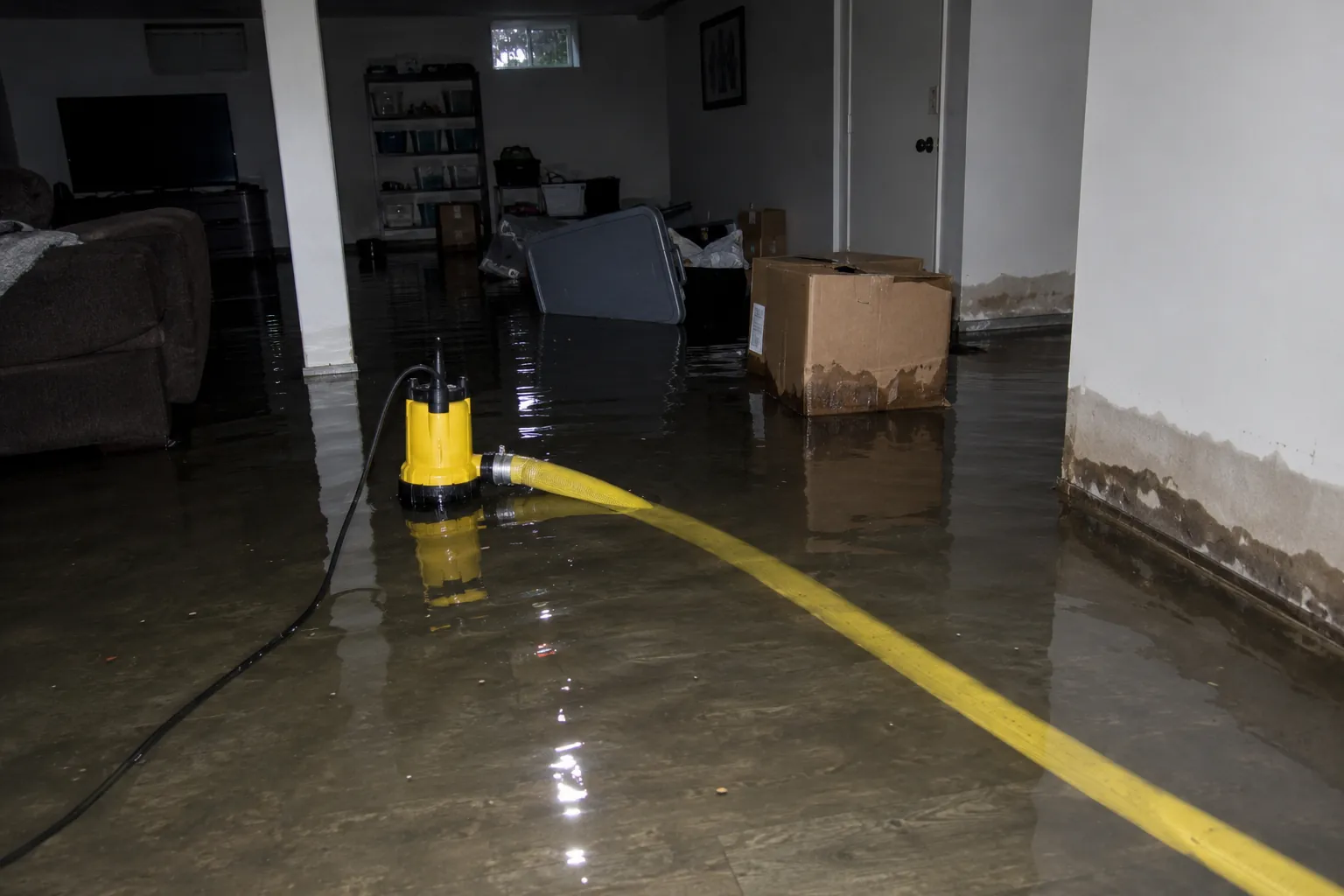
A flooded basement is harder to dry than any other room because it sits below ground. The water has nowhere to drain, the air stays cool and humid, and moisture wicks up into drywall, framing and insulation where it cannot evaporate on its own. Standing water that looks shallow has usually already soaked into everything it touches.
The longer it sits, the more you lose, and mold can begin within 24 to 48 hours in an enclosed basement. Pumping the water out is only the first step: the structure has to be dried to a verified standard or the damp comes straight back. Call the emergency line for flooded basement help in Smyrna: fast extraction, proper below-grade drying, and direct insurance billing.
Why Smyrna and Cobb County basements flood
Basement flooding here comes down to local geography as much as plumbing. Cobb County's clay soil and heavy summer storms put steady pressure on below-grade walls, and the water finds the weak points.
Clay soil & hydrostatic pressure
Cobb County's dense red clay holds water and swells when saturated, forcing groundwater against foundation walls under hydrostatic pressure until it finds cracks and joints to seep through.
Sump pump failure
A sump pump that loses power in a storm, jams or simply gets overwhelmed stops holding back groundwater, and the basement floods while nobody is watching.
Foundation seepage & cracks
Settling opens hairline cracks in walls and floor slabs, and water is pushed through them under pressure during and after heavy rain.
Storm runoff & backups
Georgia thunderstorms overwhelm gutters and grading, sending water toward the house through window wells, while a backed-up drain pushes water up through the lowest point in the home.
What's at risk in a finished basement
A finished basement is living space. A flood there soaks flooring, drywall, built-ins and stored belongings at once, so there is far more to save than in an unfinished basement. The materials used below grade also hold water, which is why fast removal matters more here than almost anywhere in the house.
- Carpet and pad over concrete trap water against the slab, so the pad almost always has to go even when the carpet can be saved.
- Below-grade drywall and insulation wick moisture upward into the wall cavity, where it sits unless the wall is opened to dry.
- Stored contents and keepsakes, often boxed on basement floors, absorb water quickly and need triage within the first day.
- Mechanicals such as the water heater, HVAC and electrics need checking before power and systems go back on.
Our basement flood cleanup process
Below-grade drying is its own discipline. The sequence below gets the water out fast, then dries the parts of the structure that hold moisture long after the floor looks clear.
Pump-out and assessment
Submersible pumps clear the standing water fast, and we scope the source, confirm the water category, and use meters to map how far moisture has traveled into walls and the slab.
Content handling
Salvageable belongings are moved out and triaged, and items damaged beyond saving are documented for your claim before disposal.
Removing saturated materials
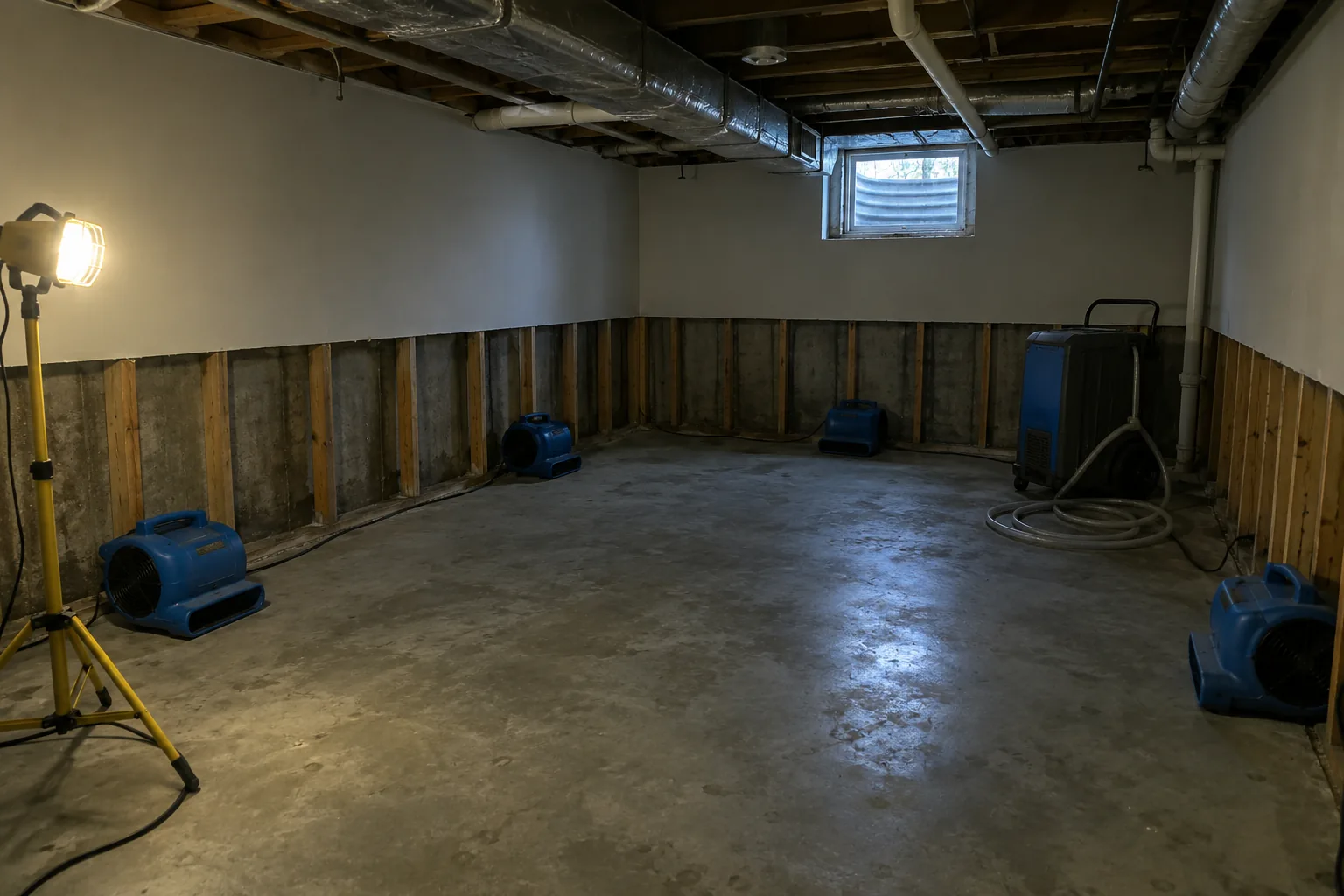
Wet carpet and pad come up, and drywall and insulation are cut a set height above the waterline, a flood cut, so the wall cavity can dry out instead of trapping water behind it.
Structural drying
Air movers and dehumidifiers are positioned to dry the slab, framing and wall cavities, with daily moisture readings. Below-grade drying runs longer than an above-ground room because the enclosed space holds humidity.
Antimicrobial treatment
Surfaces are treated to hold back mold while the structure dries, because a damp basement is exactly the environment mold needs to start.
Verification and restoration
We dry to a confirmed reading, then rebuild what came out: drywall, insulation, baseboards, flooring and paint, returning the basement to its pre-loss condition.
What we remove and what we save
Taken out
Carpet and pad, drywall and insulation below the waterline, baseboards and trim that stay wet, particleboard, and any contents damaged beyond salvage. These are documented for your claim first.
Dried and saved
The concrete slab and walls, framing, hard flooring, mechanicals once checked, and solid-wood or non-porous items. These are dried in place to a verified reading.
Mold risk in Georgia basements
A flooded basement is one of the highest mold risks in a Georgia home, because the space is enclosed, humid and slow to dry. Mold can begin within 24 to 48 hours, and moisture trapped behind drywall or under carpet keeps feeding it long after the visible water is gone.
Pumping the water out is only half the job. Mold is prevented by drying the structure to a verified standard, which reaches the moisture trapped behind walls and under floors. Where mold has already taken hold, it is contained and removed as part of the job. The water damage glossary explains the moisture terms your technician and adjuster will use.
Does insurance cover a flooded basement?
Whether insurance covers a flooded basement depends on where the water came from. Sudden internal water, such as a burst pipe, an appliance failure or some sump pump failures, is often covered by standard homeowners insurance. Surface water and rising groundwater are treated as flooding and need separate flood insurance, and sewer backups need a sewer backup endorsement.
We document the source and the damage, record moisture readings, and bill most major Georgia carriers directly. The insurance claim checklist covers what to capture before cleanup starts.
Related water damage services
We provide 24/7 flooded basement cleanup across Smyrna, Vinings, Mableton, Marietta and the rest of Cobb County, with an average response time of 45 to 60 minutes to any address.
Frequently asked questions
Why does my basement keep flooding?
A basement keeps flooding when water pressure builds against the foundation and finds a way in, usually from clay soil holding water after storms, a failing sump pump, or cracks in the walls and floor. Stopping it means addressing both the water source and the drainage around the house.
My sump pump failed and the basement flooded, what should I do?
If your sump pump failed and the basement flooded, get the standing water pumped out and the structure dried before mold starts, which can happen within 24 to 48 hours. Call for emergency extraction, then have the pump cause diagnosed so the same failure does not repeat.
Does homeowners insurance cover a flooded basement?
Homeowners insurance covers a flooded basement only when the water came from a sudden internal source such as a burst pipe or appliance failure. Surface flooding and groundwater need separate flood insurance, and sewer backups need a sewer backup endorsement.
How long does it take to dry a flooded basement?
Drying a flooded basement usually takes several days, longer than an above-ground room, because the space is below grade and holds humidity. Air movers and dehumidifiers run with daily moisture checks until the slab, framing and walls reach a verified dry standard.
Can I save basement carpet after a flood?
Basement carpet can sometimes be saved after a clean-water flood if extraction and drying start within a day or two, but the pad underneath almost always has to be replaced. Carpet soaked by sewage or water that has sat is removed, because it cannot be reliably disinfected.
How do I stop my basement flooding again?
To stop a basement flooding again, keep the sump pump maintained with a battery backup, direct gutters and grading away from the foundation, and seal foundation cracks. Where clay soil holds water against the walls, an interior drainage system may be needed.
Flooded basement in Smyrna? Call now.
A flooded basement only soaks in deeper and grows a bigger mold risk the longer the water sits below grade. Our Smyrna crews respond around the clock to pump it out, dry the slab, framing and walls to a verified standard, and rebuild what had to come out. The sooner the call, the more we save. Contact us now for 24/7 emergency basement flood cleanup in Smyrna, GA.
Call 770-762-0688